
What Is Reverse Engineering and How Is It Used in Game Development?
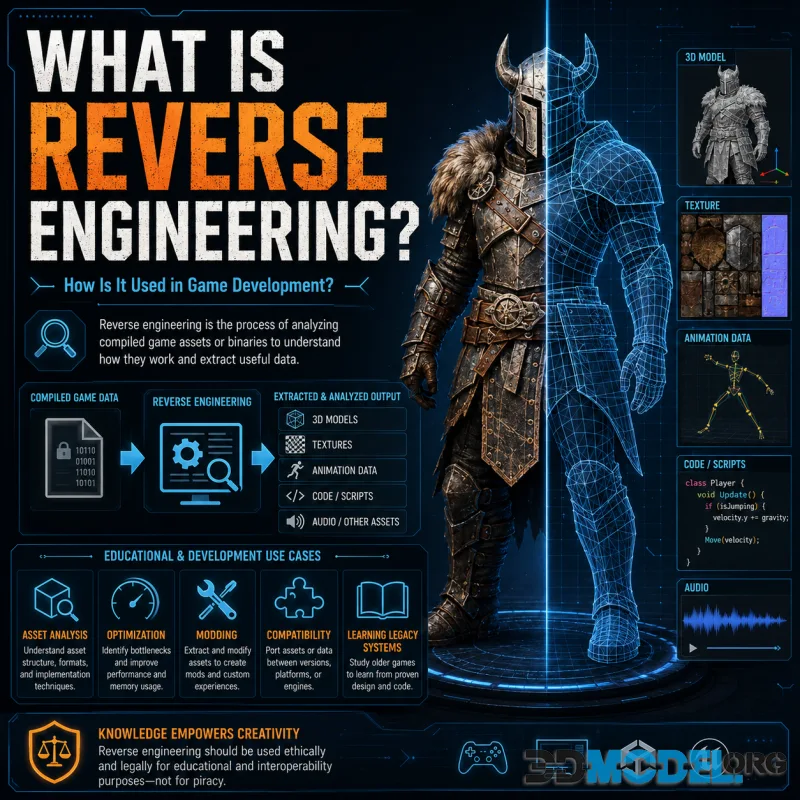
Reverse Engineering in Game Development: Purpose, Methods, and Use Cases
Reverse engineering an unfamiliar data file is kind of like piecing together a puzzle.
It’s similar to the scientific method, yet instead of studying nature, you’re digging into man-made systems. Here, one’s starting by gathering data, then using it to form a few guesses. Test those guesses, adjust them based on the results, and repeat as needed.
But what is reverse engineering, exactly? Let’s break it down. And here’s another thing: I’d like to remind you that on our website, you can download incredible collections of game assets for Unity (follow the link) and Unreal Engine - check out this category. It features a huge selection of ready-to-use packs for indie and professional game development.
The Fundamentals of Reverse Engineering
Technically speaking, reverse engineering is all about ‘tearing apart’ systems in order to understand how they’re built, how they work, and what makes them tick. Like, you pull data from different sources – executables, libraries, config files – at various levels, from raw source code to design choices and specs. And this all can involve manual work (like disassembling) or automated tools that speed things up.
Back in gaming and software dev, reverse engineering’s a big deal.
Like, it helps people study proprietary tech, make sure stuff works across platforms, and create some custom mods. It’s also huge in cybersecurity, where it’s used to find weaknesses and beef up app security. Lastly, let’s not forget digital archaeology – reviving old games and programs so newer generations can experience them and see how far tech’s come.
How Is Reverse Engineering Utilized in the Gaming Industry
Be that as it may, one of the biggest ways reverse engineering’s used in gamedev is exactly for modding. It lets people to tweak games by adding new features, content, you name it.
Like, most of the mods for Skyrim and GTA V were made this way.
Basically, reverse engineering helps in figuring out how a game works when there’s zero to no source code. Well, or docs to go off of. That said, devs dig into executables, engines, and game files to suss out mechanics, algorithms, or data formats. That knowledge helps them build mods, patches, tools, or even port games to other platforms.
How Reverse Engineering Works in Stages
There’re three main ways to do it:
- Translate the binary file into high-level code. Programs called ‘disassemblers’ handle this. They know how code works and can convert it into something more readable, like C++. The catch is that the output usually lacks variable names and comments, so the dev’ll have to spend time figuring out what each part does.
- Translate the binary into assembly. Assembly’s a step above code, yet way lower than Python or jаvascript. Since every processor understands it, it’s the easiest way for a thing open a binary. However, reading the very assembly ain’t simple – you’ll need to know how the processor works, what commands it uses, and all that low-level stuff. Without prep, it’s nothing but a severe headache
- Study the network/data traffic. Programs constantly send data – over the net or inside the OS. Reverse engineers use network analyzers to check on this traffic. For example, Chrome’s got one built right in. That said, just hit F12 (DevTools) and check the ‘Network’ tab.
The Reverse Engineering Process
Do some recon first. Play with the app – click every button, test every feature. Get a feel for how it behaves. Next, crack it open – use one of the methods above to peek inside and see how it ticks. Then, analyze the pieces. Once you’ve got the code, figure out the algorithms, data structures, and how they fit together. Track method execution, external calls, etc.
And document everything. Like, always write down what each function does, its inputs/outputs, and how data flows. Clear docs save you (or others) from confusion later.
Fair warning: This whole process takes time. Some programming know-how’s a must – otherwise, you’re in for a rough ride. But hey, give it a shot anyway.
It’s also handy for studying competitors’ tricks or reviving old games where the code’s gone MIA. Sure thing, one always has to watch out for legal stuff – this kind of tinkering can sometimes step on license agreements. Do note that, please.
But you know what’s 100% lawsuit-proof? The free assets on our site. Like, we’ve got hundreds of them for your game or architectural projects – creature models, fantasy junk, furniture, even realistic lamps with actual lighting. And nope, no paywall or sign-up. Just grab them. Easy as that.
Ctrl
Enter
Noticed a misTake
Highlight text and press Ctrl+EnterRelated news:



Comments (0)
Information
Users of Guests are not allowed to comment this publication.
Users of Guests are not allowed to comment this publication.